The Most Dangerous Number In Business Is …
- John Denton
- Scaling Up Businesses
One of anything!
Think about the 1's as single points of failure. For example...
ONE major client. Even with contracts in place, there are many ways you can lose the client and if you do then your business is likely to fail.
ONE supplier. Again, even with contracts in place risk is real. The supplier could go out of business, cancel the contract or be taken over and change or cancel the arrangements.
ONE key ‘expert’. What happens if the ‘expert’ leaves the business, suffers ill health or is poached by a competitor? Worst case is when the business owner is the expert.
ONE key employee. Some businesses rely on one key person (or owner) to do everything. All the knowledge is “in their head” and that is a major risk.
ONE product or service can become a problem. If that product or service goes out of favour or is replaced by AI or people can buy cheaper over the internet or from overseas suppliers, then you are in trouble.
ONE computer system/database with all the business records on can be very high risk. Yes, I’m sure you do backups – but do you take them off-site and when was the last time you tested your ‘disaster recovery process? How long before you would be back up and running?
I could go on but I’m sure you have got the message.
It IS risky having 1’s in your business.
When it comes to selling your business all the 1's will be red flags for a potential buyer. Especially if some of those 1's are embedded in the owner. The owner is the ONLY ONE who is expert in the product or service. The ONLY ONE who has relationships with the key clients or key suppliers.
A good business is a profitable, commercial enterprise that runs successfully without the owner(s) having to be there.

And then the business is saleable and attractive to potential buyers!
So what do you do about the 1's?
Well, the starting point is to conduct periodic “risk analysis” assessments. It doesn’t need to be onerous and is best done on a regular and ongoing basis. A SWOT analysis followed by a PESTLE analysis is a process I use with some of my clients. It is a great way to really understand your business, warts and all! (See my blog on "Warts and all")
At your regular management or team meetings, take distinct parts of the business each month (or period) and brainstorm using a SWOT and PESTLE analysis process. It often improves the process if you have an external coach involved in these sessions because they are not too close to the business or emotionally attached to it. They will ask better, probing questions and give you honest and impartial advice.
My Business Owners Taking Action (BOTA) cohort groups are another way to get external and independent input about your business. It's like having an advisory board without the expense of paying board members. More about BOTA Groups HERE.
Probability Versus Impact Risk Analysis Process
When you have identified the risks in various parts of the business, categorise them by using the PROBABILITY / IMPACT process. Assess how likely things are to occur and then assess the possible impact on the business. For most businesses, it is sufficient to score IMPACT and PROBABILITY as HIGH, MEDIUM or LOW. Then prioritise the risks starting with the ones which scored HIGH on both PROBABILITY and IMPACT. Now brainstorm ways to mitigate the risk.
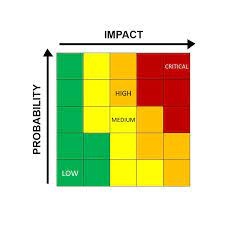
As they say – forewarned is forearmed!
Prior Preparation and Planning
As well as assessing the ONE risks, consider trends and external risks. Such things as the impact of COVID-19 type events on the economy; variations in the Australian Dollar; rising unemployment; a possible downturn in the mining, resources and manufacturing sectors and things like government legislation and changes in government. More topical at the moment is the impact that the Donald Trump presidency will have on world economies and businesses. This is called scenario planning and is not used enough in small and medium businesses. The PESTLE process is the best tool for scenario planning.
Get many heads, not ONE, working on your business.

In my Business Owners Taking Action (BOTA) cohort groups there are no competing businesses so members can explore and work on ideas openly and honestly. Members are challenged and kept accountable for growing their business. Occasional expert speakers and members contribute ideas and work on issues to help everyone.
I now have both local face to face (Perth, Australia) and online only BOTA groups available. Contact Me to enquire about becoming a Business Owner Taking Action.
- Free